
Cornrows and bobs used to live in separate conversations. One was a protective style built for durability, the other a haircut you’d get trimmed every six weeks. Somewhere along the way, stylists started combining the two, and the result solved a problem a lot of women didn’t know they had: how to get the low-maintenance benefits of braids without committing to waist-length hair or hours in a salon chair. Bob braided hairstyles with cornrows now show up everywhere, from office settings to weddings to a regular Tuesday, because the length keeps things practical while the braid pattern does all the visual work. What makes this style category interesting is the range inside it.
Straight-back rows read completely differently than a zigzag part or a half-up design, even though they’re built on the same technique. If you’re trying to figure out which version fits your face, your hair texture, or the event you’re getting ready for, here are ten to consider before your next appointment.
Straight-Back Cornrow Bob
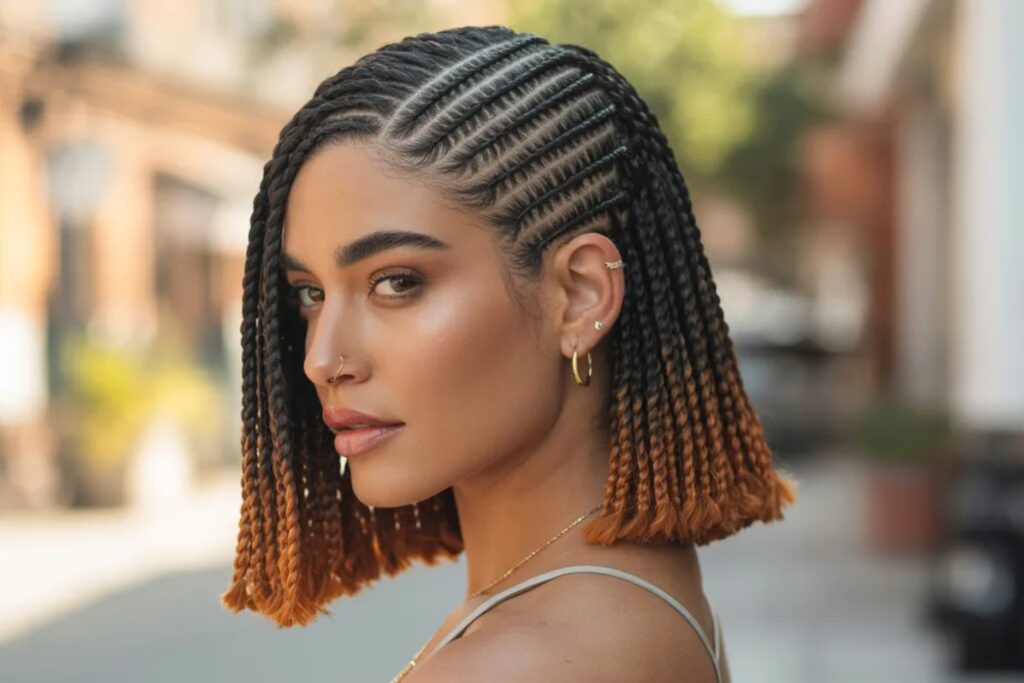
This is the style most people picture first, and for good reason. Rows run straight from the front hairline to the nape, ending at bob length, usually somewhere between the chin and the shoulders. The appeal is in the simplicity. There’s no pattern to memorize, no asymmetry to plan around, just clean, parallel lines that read as polished from any angle. It works especially well for round or oval faces since the vertical lines add a bit of length to the face without changing its shape.
Durability is the other selling point. Because the rows sit flat against the scalp, this version holds up well under hats, helmets, or a full week of humidity. Expect it to last two to four weeks with proper care, longer if you sleep with a silk scarf or bonnet. Edge control and a light oil sheen at the hairline keep it looking fresh past the first few days.
Feed-In Cornrow Bob
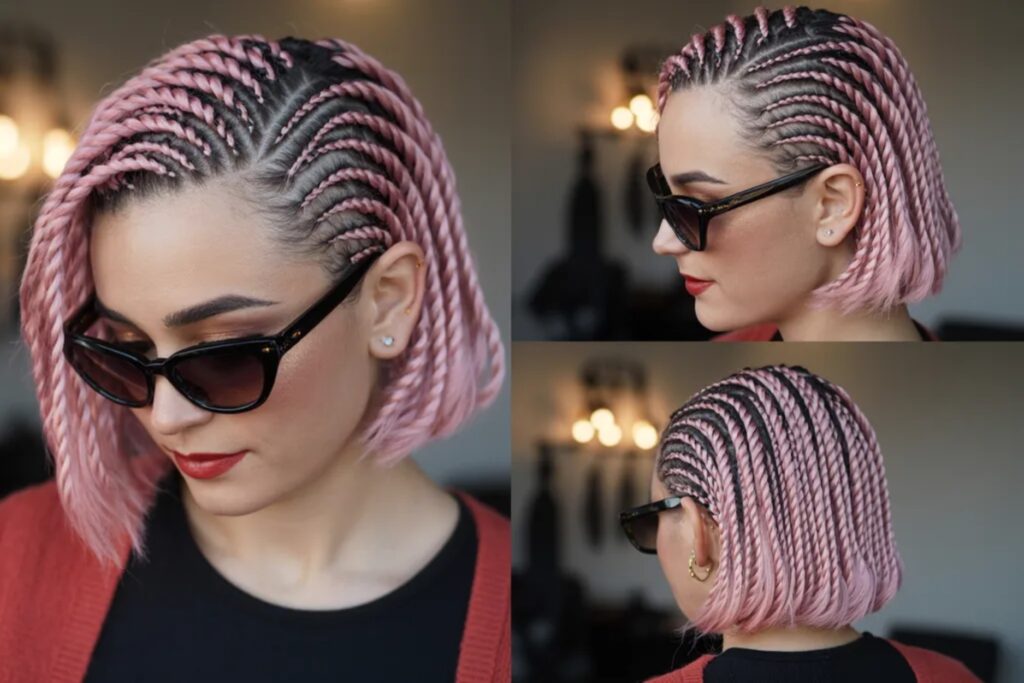
Feed-in braids build length and thickness gradually by adding small pieces of hair as you go, which means the rows start thin near the front and get slightly fuller toward the back. On a bob, this creates a more natural, less rigid look than traditional cornrows, since the braid gradually blends into the rest of the hair instead of sitting as one uniform thickness. It’s a good option if your natural hair is fine or if you want the braids to look like they could be growing straight from your scalp rather than added on top.
Stylists often use this technique for curved or side-swept patterns because the tapering makes bends look smoother. The tradeoff is time. Feed-ins generally take longer to install than straight-back rows, since each section needs hair fed in at a consistent rate. Once it’s done, though, it tends to lie flatter and last just as long.
Zigzag Cornrow Bob
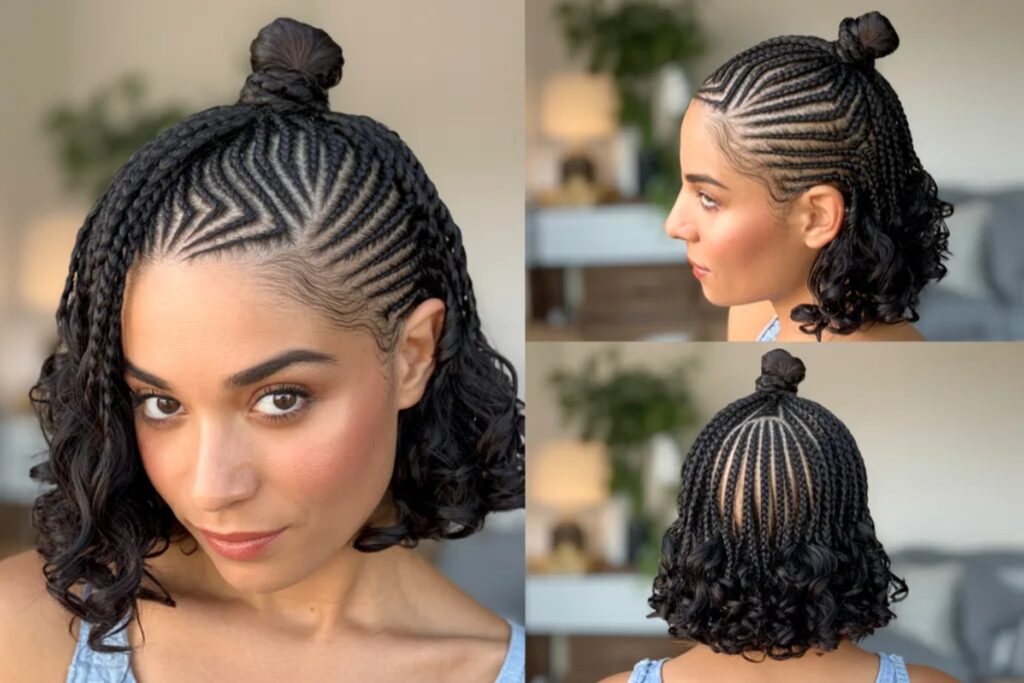
Zigzag partings turn a basic braid pattern into something with actual visual interest. Instead of straight rows, the parts weave back and forth across the scalp, creating a broken, geometric look that photographs particularly well. This version works for anyone who wants cornrows without the style reading as plain or overly simple, which is a common complaint with straight-back rows on shorter lengths. The zigzag also does something practical: it can visually widen a narrow face or balance out features by breaking up the straight vertical lines a basic cornrow bob relies on.
Installation takes a bit more skill than straight rows, so it’s worth finding a braider who’s done zigzag patterns specifically, not just cornrows in general. Ask to see photos of their zigzag work before booking, since the spacing and consistency of the zags make or break the final look.
Half-Up Cornrow Bob
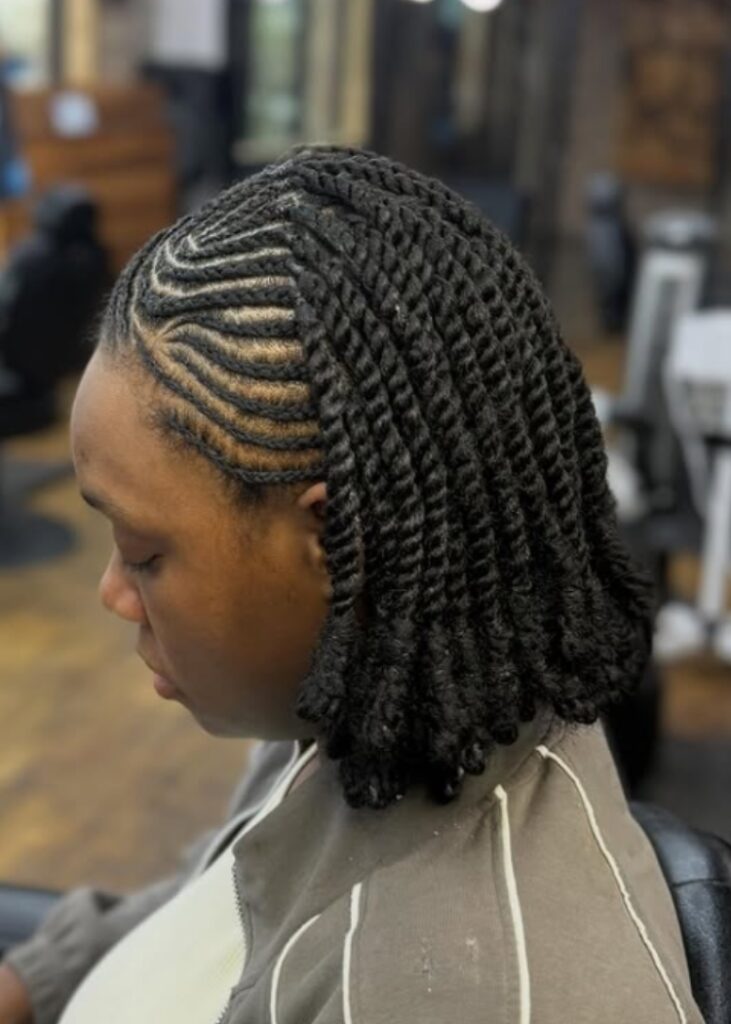
Not every occasion calls for a full head of braids, and this version splits the difference. The top section gets cornrowed back into a bun, ponytail, or simply left loose at the crown, while the bottom half stays as a regular bob, either braided to match or left natural. It’s a practical choice for anyone who wants the structure of cornrows without fully committing to braided ends, and it also cuts down on installation time since only half the head needs braiding.
This style tends to work well for special occasions specifically because it photographs from multiple angles well, the visible braid pattern up top reads as intentional and styled, while the loose or braided bottom keeps things soft. It’s also a reasonable middle ground for anyone easing into cornrows for the first time and not ready to braid an entire head.
Cornrow Bob with Curly Ends
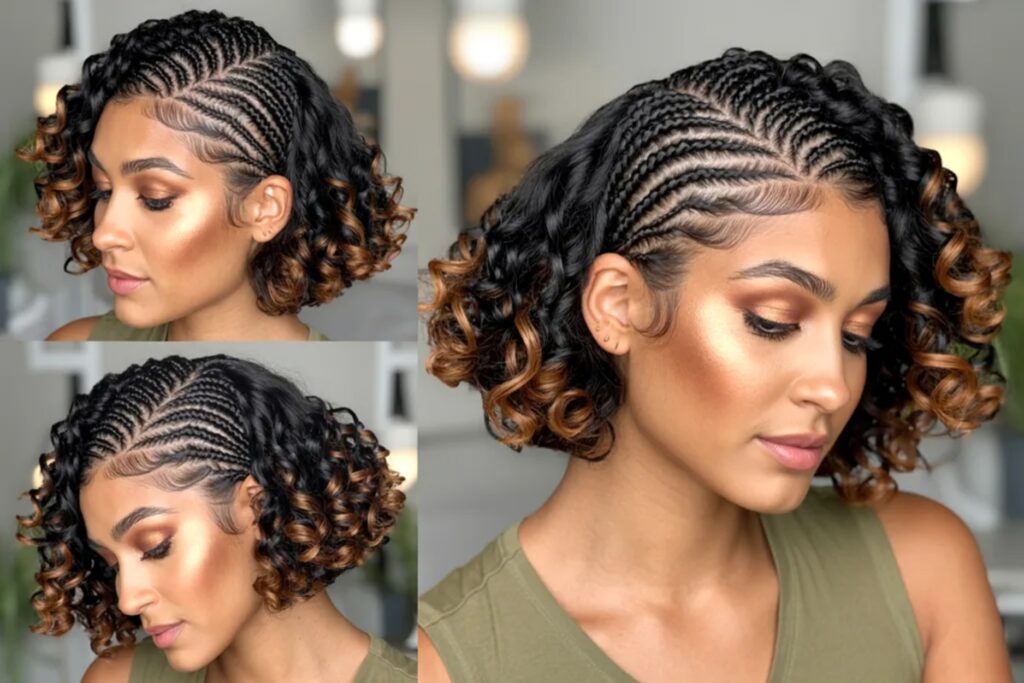
Pairing sleek, tight cornrows with loose, curly ends creates a deliberate contrast that’s become one of the more requested versions of this style. The rows themselves stay neat and structured near the scalp, while the ends, either natural curls or curly extensions, add volume and softness lower down. This combination works particularly well for anyone who finds an all-braided bob too severe or uniform, since the curly bottom breaks up the rigidity. It also gives you two textures in one style, which reads as more dimensional in photos than a flat, single-texture braid.
Maintenance depends heavily on whether the curls are your natural hair or extensions. Natural curl ends need regular moisturizing to avoid dryness at the point where braid meets curl, since that transition zone tends to dry out faster than the rest of the style.
Side-Part Cornrow Bob
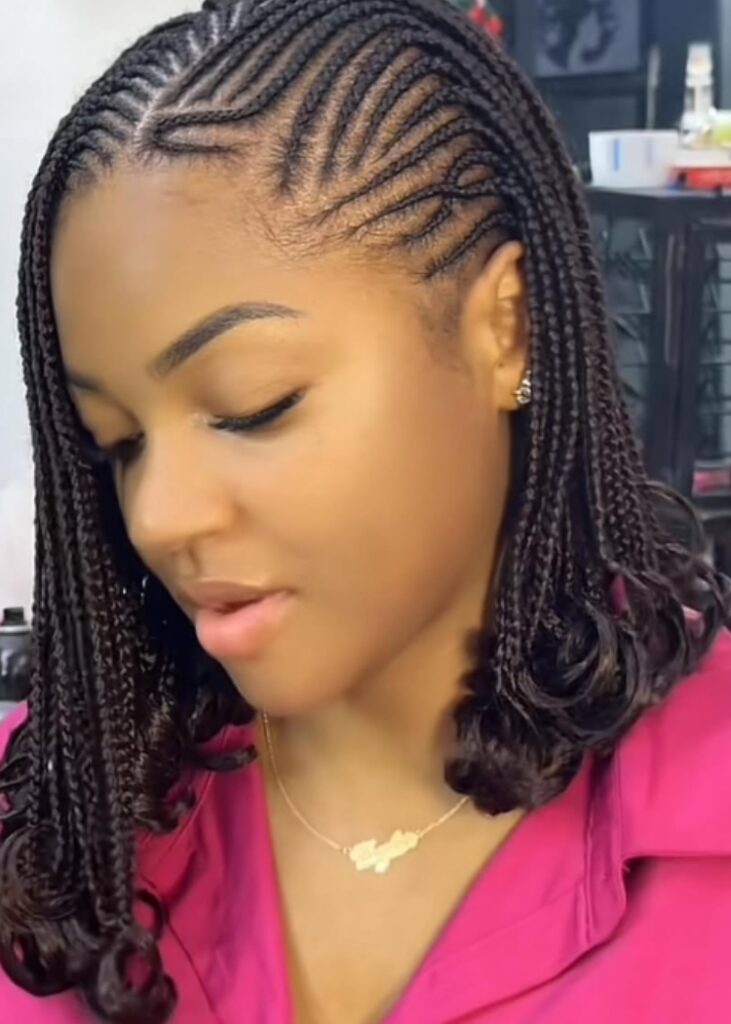
Moving the part to one side instead of down the center changes the entire feel of a cornrow bob, giving it a more asymmetrical, editorial look. Rows fan out from the deep side part, which tends to flatter oval and heart-shaped faces particularly well since it softens a wider forehead. This version also works well if you’re growing out bangs or dealing with a receding section near the temple, since the side part and braid direction can be adjusted to cover thinner areas. It’s a slightly more versatile option than a center-part style because the deep side part alone changes the look enough to feel like two different hairstyles depending on which side you part from.
Braiders will sometimes recommend starting the rows a bit further back from the hairline on this style to avoid tension at the part itself, which is worth asking about before your appointment.
Bob Cornrows with Beads
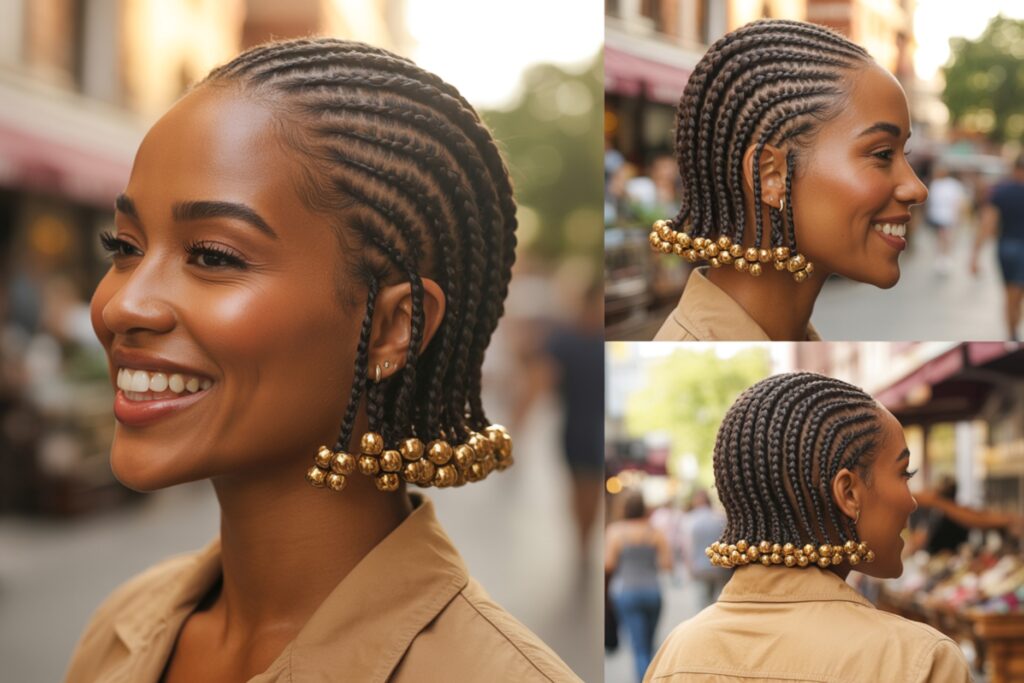
Beads turn a cornrow bob into something with movement and sound, literally, since the beads click against each other with every head turn. This version leans more decorative and works especially well for cultural events, parties, or any occasion where a bit of drama is welcome. Bead placement matters more than people expect. A few beads scattered at the ends read as playful and understated, while a full head of beaded ends makes a much bolder statement. Weight is the main practical concern here.
Beads add noticeable weight to braided ends, so it’s worth discussing bead size and material with your braider if you’re worried about strain on natural hair, especially at the front hairline where tension is already highest with cornrows. Plastic beads tend to be lighter than metal or wooden ones if this is a concern.
Cornrow Bob with a Bun
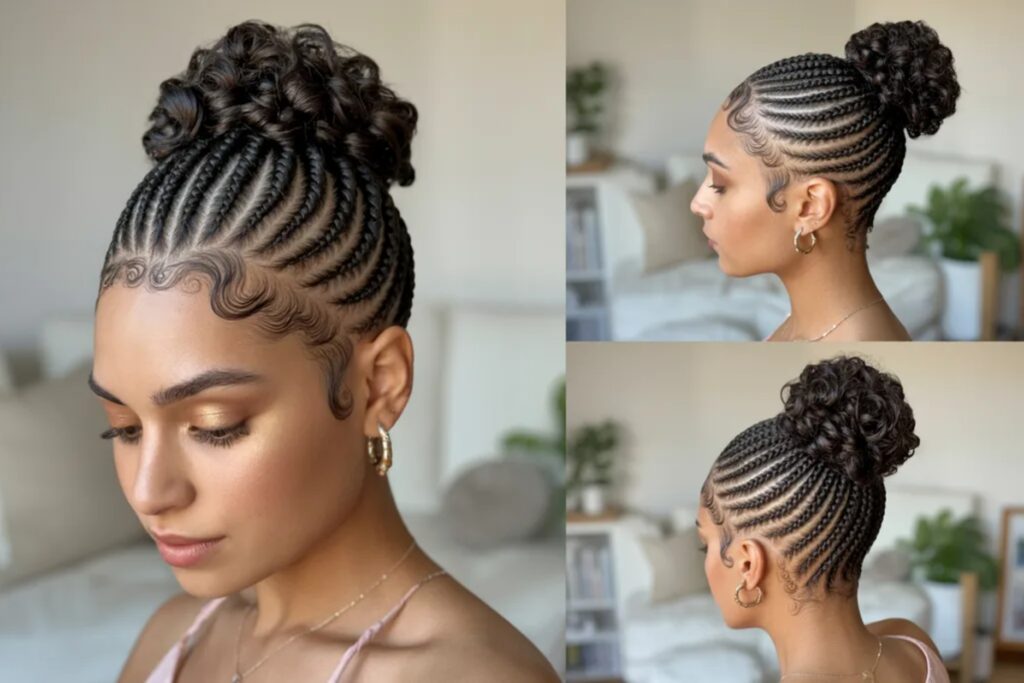
Braiding the entire head into cornrows and then gathering the ends into a low or high bun solves a specific problem: how to get a fully protective style that still looks buttoned-up enough for professional settings. The cornrows do the protective, low-maintenance work underneath, while the bun on top reads as neat and intentional, which matters in workplaces that still have unfair or inconsistent policies about braided hair.
This version also tends to last slightly longer than a fully loose cornrow bob since less of the braid is exposed to daily friction from clothing collars or bags. A few face-framing pieces left out near the temples soften the overall look if a completely sleek, pulled-back style feels too severe for your features.
Colored Cornrow Bob
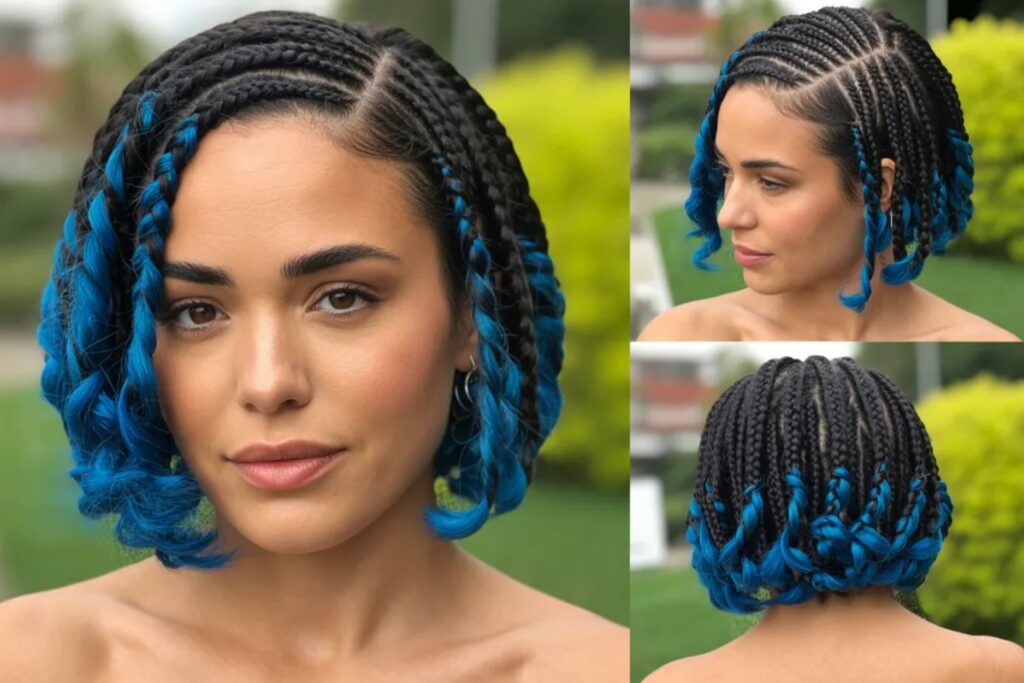
Adding color, whether through dyed natural hair or colored extensions, turns a standard cornrow bob into something considerably more expressive. Warm caramel and honey tones tend to be the most requested for a reason: they add dimension without looking jarring against most natural hair colors, and they photograph well in both daylight and artificial lighting. Bolder choices like burgundy, copper, or even a few strands of a brighter color work well for anyone wanting a style that reads as more fashion-forward, particularly for events like festivals or parties where a more conservative look isn’t the goal.
If you’re using color on your natural hair rather than extensions, it’s worth having a conversation with your braider about hair health beforehand, since chemically colored hair braids differently than virgin hair and may need extra conditioning before installation to avoid excess breakage at the part lines.
Cornrow Bob with Accessories
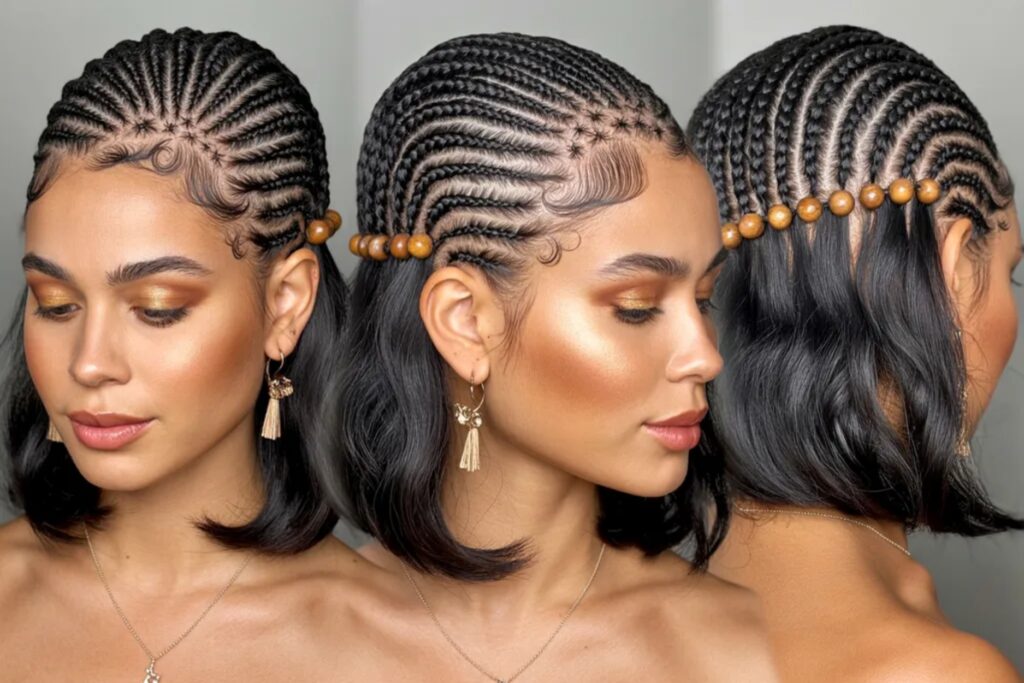
Cuffs, gold rings, ribbon, or small charms threaded onto individual braids turn a cornrow bob into a style with a bit more personality, and this version tends to get the most attention at events specifically because the accessories catch light and movement in a way plain braids don’t. Gold cuffs at the ends of a few select rows create a subtle, elegant look suitable for weddings or formal events, while ribbon woven through the braids leans more playful and works well for casual gatherings or festivals. The key with accessories is restraint.
A few well-placed pieces read as intentional and polished, while covering every braid in hardware can start to look cluttered and add unnecessary weight. Discuss placement with your braider ahead of time, since some accessories need to be threaded on before the braid is finished rather than added afterward.
Which Bob Braided Hairstyle with Cornrows Is Right for You?
Picking the right version really comes down to two things: how much upkeep you’re willing to do, and what the occasion actually calls for. A straight-back or feed-in bob makes sense for daily wear since both hold up well and need minimal fuss once installed. Beads, color, and accessories are better suited to events where you want the style to do a bit more visual work. Bring reference photos to your braider, be honest about your hair’s current condition, especially if it’s colored or has been recently relaxed, and give yourself a realistic timeline before whatever event you’re braiding for. A good cornrow bob should feel like it was worth the appointment, not just something you sat through.
Frequently Asked Questions
How long do bob cornrow braids last?
Most bob cornrow styles hold up for two to four weeks, depending on hair type and how well they’re maintained. Using a silk scarf at night and light oil on the scalp helps extend that timeline.
Are cornrow bobs good for natural hair?
Yes, they’re considered a protective style, which shields natural hair from daily manipulation and breakage. They work especially well for those trying to retain length while giving their hair a break from heat styling.
How much does a bob cornrow hairstyle cost?
Prices typically range from $60 to $150, depending on the pattern’s complexity, whether extensions are used, and your location. Styles with beads, curly ends, or intricate designs usually cost more than basic straight-back rows.
Can you wash your hair with cornrow braids in a bob?
Yes, but it’s best done with diluted shampoo applied directly to the scalp using an applicator bottle rather than scrubbing normally. Gently rinsing and allowing the braids to air dry fully helps prevent odor and buildup.
What’s the difference between a cornrow bob and a knotless braid bob?
Cornrows are braided flat against the scalp in rows, while knotless braids start with your natural hair and gradually feed in extensions without a visible knot at the root. Knotless styles tend to feel lighter and put less tension on the hairline.