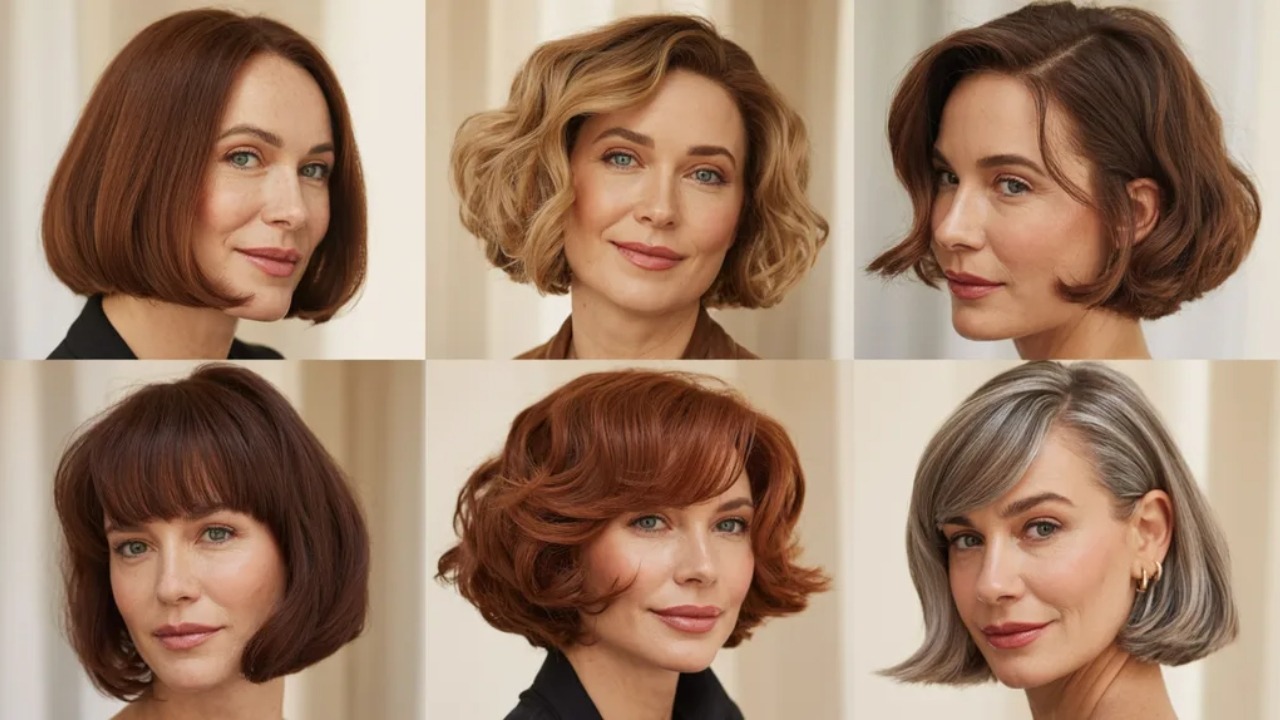
At some point in your 40s, the haircut that worked for a decade quietly stops working. Nobody tells you exactly when. You just start noticing it in photos before you notice it in the mirror. If you’re searching for short bob hairstyles for women in 40s, you’re probably after two things at once: less time spent styling in the morning, and a cut that still looks intentional under office lighting, at a dinner out, wherever. The bob earns its reputation here, not because it’s one magic style but because it’s really a whole category. A blunt bob and a stacked bob are solving completely different problems. One disguises thinning at the crown. The other makes fine hair look thicker at the root. Knowing which problem you actually have matters more than picking a style off a mood board. Here are ten worth bringing to a stylist, along with what each one is genuinely good for.
Classic Blunt Bob
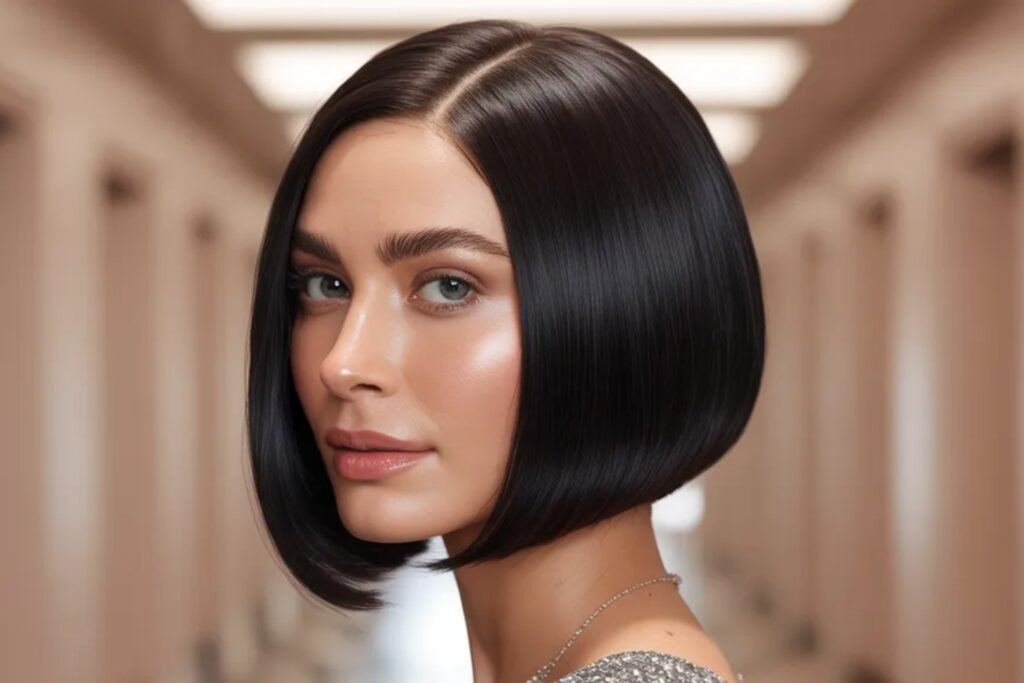
This is the bob everyone pictures first: one length, cut clean across, landing at or just below the jaw. There’s a reason it hasn’t gone out of style in fifty years. The flat edge tricks the eye into reading hair as denser than it actually is, which is a bigger deal once strands start thinning with age than most people expect going in. It frames the face without swallowing it, and it doesn’t age out the way some “of-the-moment” cuts do after a couple of years. The tradeoff is upkeep. Ends grow out unevenly, so figure on a trim roughly every six weeks if you want the line to stay sharp. Ask for razor-free finishing, too. It keeps the edge clean instead of letting it feather out into something scraggly by week four.
Textured Lob with Layers
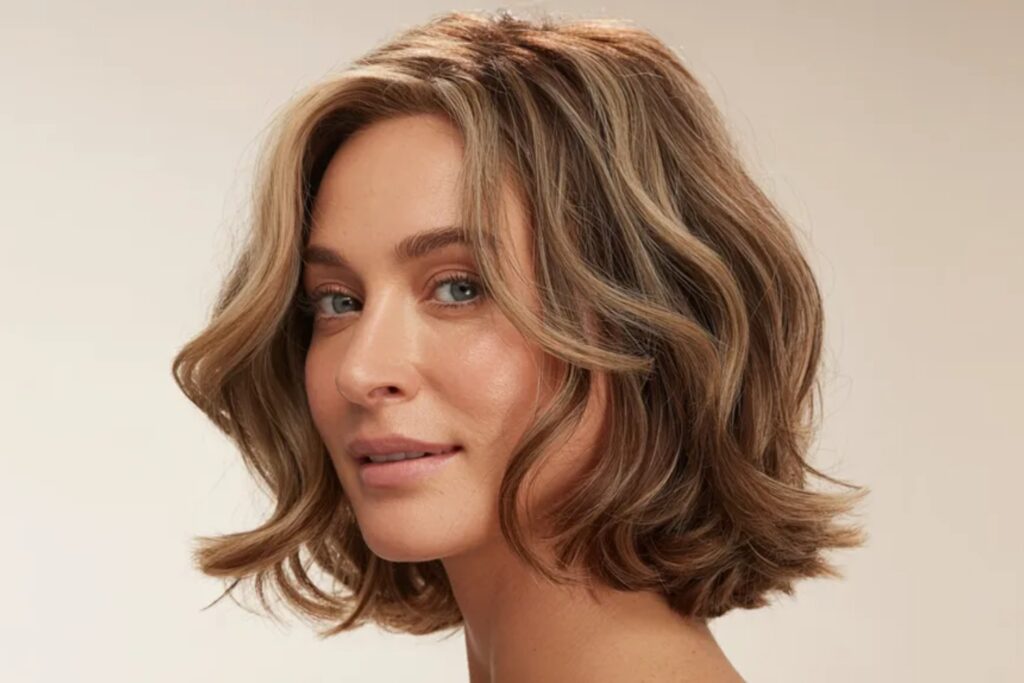
The lob, or long bob, is for anyone who likes the idea of going short but isn’t quite ready to commit. Layers through the mid-lengths keep it from sitting heavy, which is the real risk with a one-length cut on thicker hair. Done well, it looks a little undone: waves left alone, a loose curl, product scrunched in rather than smoothed flat. Round and square face shapes get the most out of it, since the layered ends soften edges that a blunt cut would only emphasize. Maintenance is close to nothing. Texturizing spray, fingers through damp hair, and you’re out the door.
Angled Bob with Longer Front Pieces
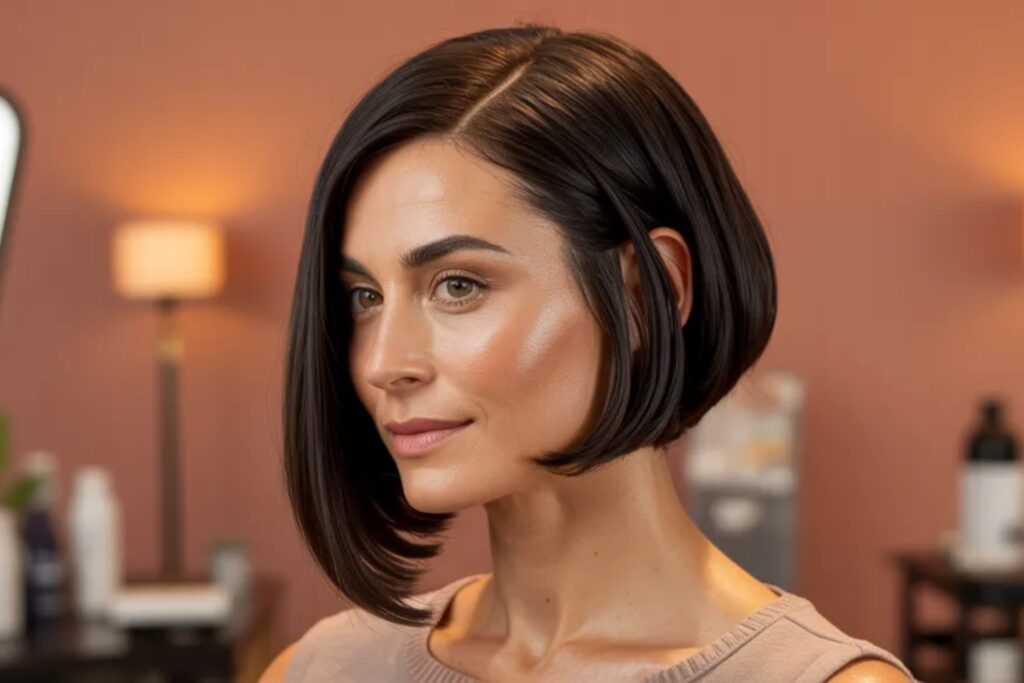
Cut the front sections a bit longer than the back and the diagonal line draws the eye upward, which makes the neck look longer than it is. It’s a small structural trick, but it works. This version reads slightly edgier than a symmetrical bob while still being entirely wearable in a corporate setting, a combination that’s rarer than it sounds. Rounder faces benefit the most here, since the angle cuts across the face’s width instead of following it. It also grows out more gracefully than a blunt cut does, so you can stretch the time between salon visits a bit further.
Wavy Bob for Natural Texture
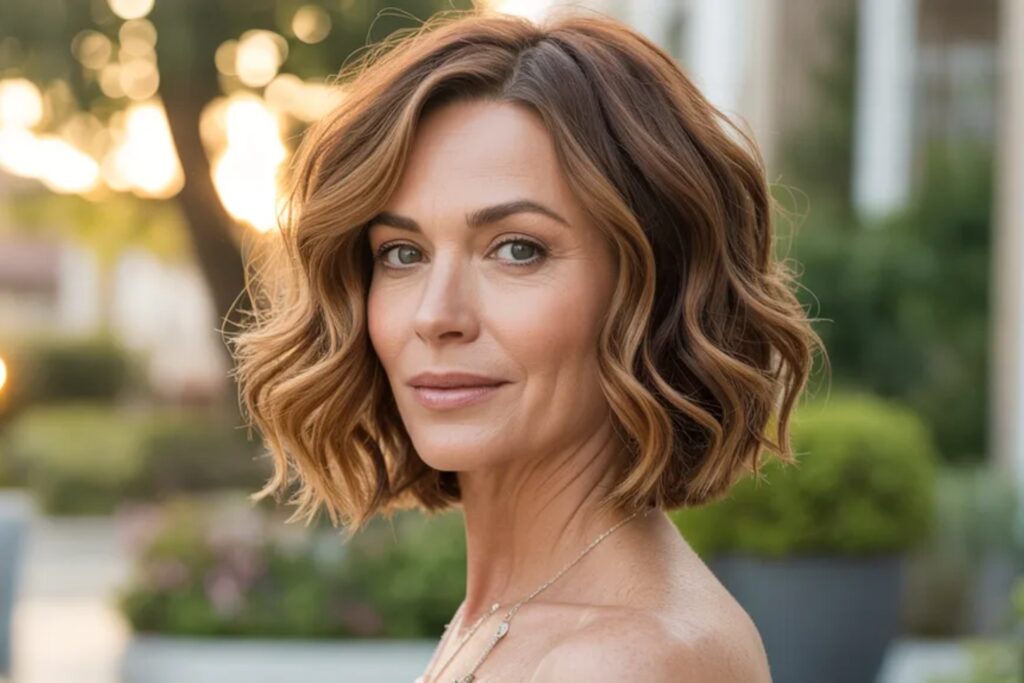
If your hair waves on its own, this is the easiest style on the list, full stop. You’re not fighting the hair. You’re cutting with what it already wants to do. The result has a loose, slept-in look that somehow reads as more put-together than a stiff blowout ever does, which feels backwards until you actually try it. It works especially well on medium or fine hair, where the wave pattern fakes body that isn’t there naturally. Scrunch a salt spray into damp hair, let it air-dry, and that’s most of the routine handled. It also holds up in humidity noticeably better than anything smooth does, which matters a lot more day to day than people give it credit for.
Sleek Chin-Length Bob
There’s a specific kind of polish that only a flat-iron and a chin-length bob can produce together. The smooth finish shows off cheekbones and jawline in a way looser cuts just don’t, and it moves easily from a work meeting to dinner without needing a re-style in between. Both straight hair and naturally frizzy hair can wear this well, though frizzy textures will need the iron every single time, no shortcuts. Fuller face shapes tend to look slimmer with the length landing right at the chin. A drop of shine serum on dry ends keeps flyaways down without weighing the whole style flat.
Stacked Bob for Fine Hair
Thinning at the back of the head is one of the most common frustrations women bring up after 40, and the stacked bob exists mostly to answer it. Layers get shorter and tighter at the nape, then lengthen gradually toward the front, which physically lifts hair away from the scalp instead of letting it lie flat against it. From the side, it has a rounded, built-up shape that reads as noticeably denser than the hair underneath actually is. It’s not a cut you can ignore for months, though. The stacking softens fast, and once it does, the whole shape starts to droop. Six to eight weeks between trims is really the outer limit.
Curly Bob for Natural Curls

Curly hair needs to be cut differently than straight hair, and a surprising number of stylists still get this wrong. Curls shrink as they dry, sometimes by several inches, so the cut has to build in extra length up front to land where you actually want it. Done right, a curly bob bounces at the jaw or collarbone and needs a fraction of the heat styling that longer curly cuts demand. Curl cream, worked through soaking wet hair before it’s touched again, is what keeps the shape defined instead of frizzy by afternoon. There’s an underrated bonus, too: the shorter length hides gray regrowth better than long curls do, simply because there’s less hair showing the line between old color and new growth.
Bob with Side-Swept Bangs
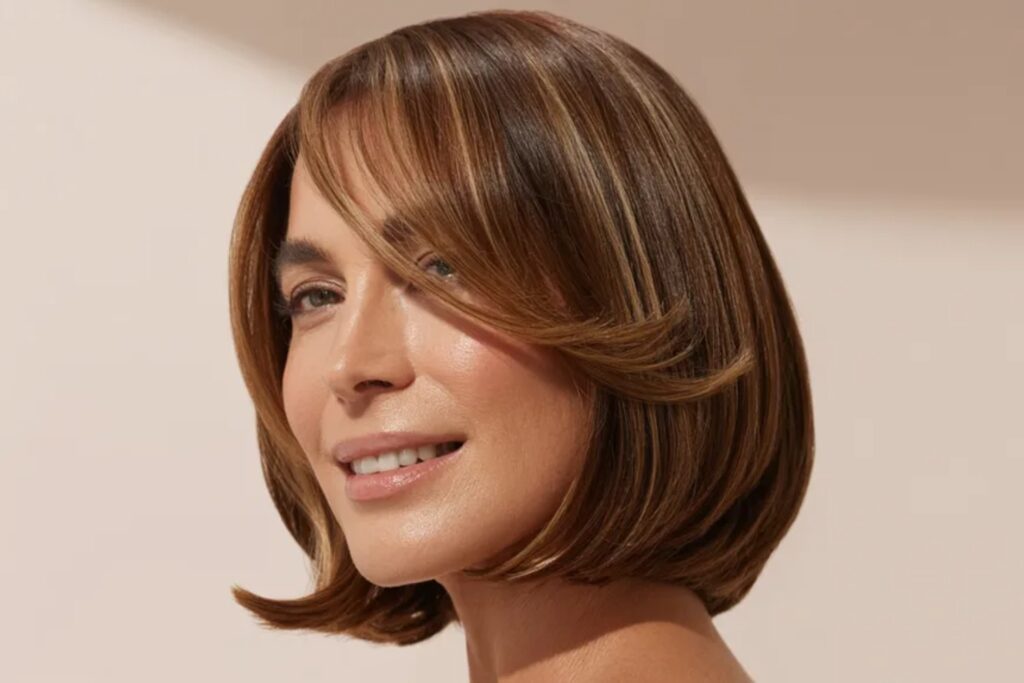
Bangs swept to one side soften the face almost immediately, mostly by breaking up the forehead and covering the fine lines that tend to show up there first. They’re kinder than blunt, straight-across bangs in one specific way: they grow out into a normal side part instead of forcing you through an awkward in-between stage. Oval and heart-shaped faces suit this combination especially well. On the days you don’t want to deal with them, they tuck back into the rest of the style without looking unfinished, which is more than you can say for most bangs. A round brush and a few minutes with a blow dryer covers the whole routine.
Inverted Bob with Volume
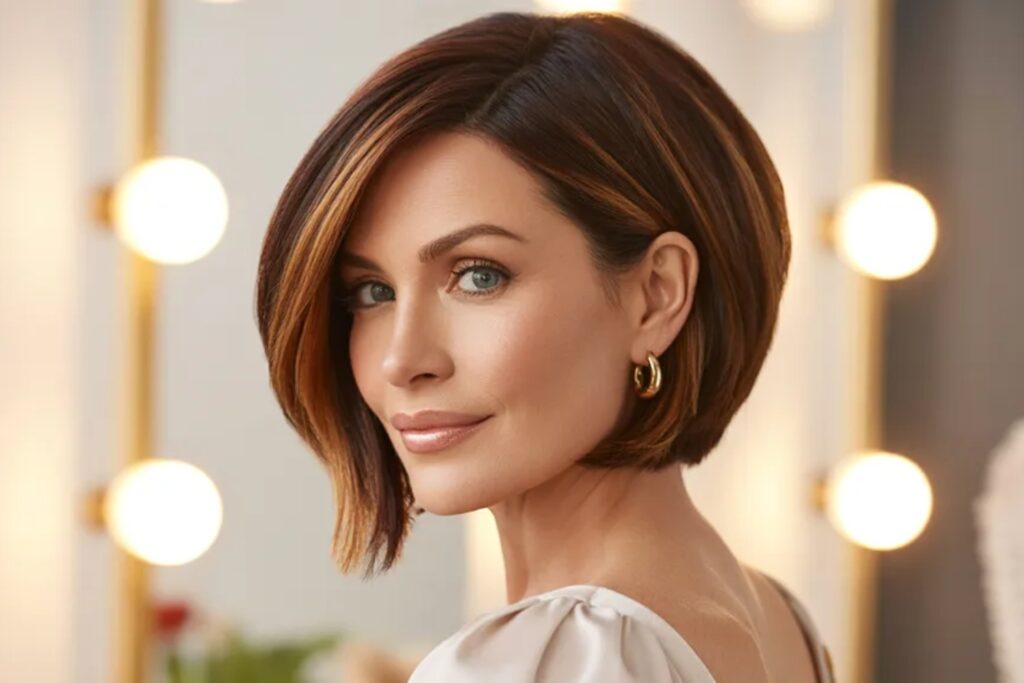
Short in the back, longer toward the face. That’s the whole shape, and it builds volume exactly where fine or limp hair tends to fall flat on its own. It elongates a shorter neck and gives the entire silhouette more structure than a blunt cut would manage. There’s a slightly bolder edge to it, but it’s still practical for everyday life. The graduated back genuinely means less hair to deal with after a workout or on a humid afternoon. Volumizing mousse worked into damp roots is what actually makes the lift last through the day instead of falling by noon.
Pixie-Bob Hybrid
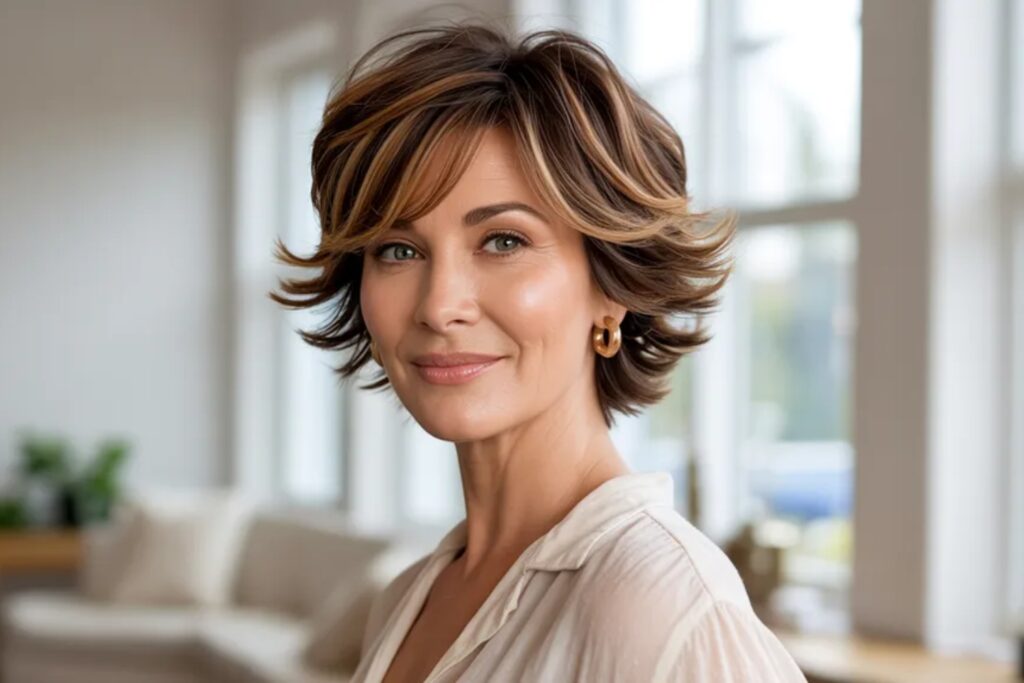
For anyone circling a pixie cut but not quite ready to commit to one, this hybrid splits the difference. Shorter around the ears and nape, a bit more length left on top and around the face. It photographs well, which matters more than people like to admit, and day-to-day styling is mostly a bit of texturizing paste worked through with fingers, nothing more involved than that. Strong facial features tend to carry this cut particularly well, and it suits straight to slightly wavy hair better than very curly textures do. It’s also one of the better cuts for going gray on purpose. The shorter length keeps the regrowth line from ever getting obvious enough to bother you.
Short Bob Hairstyles for Women in 40s That Boost Confidence
Most of this decision comes down to two things: what your hair actually does on its own, and which specific problem you’re trying to solve, whether that’s thinning at the crown, flatness at the back, or a jawline you’d like to define a little more. A blunt bob and a stacked bob aren’t interchangeable just because they’re both technically bobs. They’re built to fix different things. Bring two or three of these ideas to your next appointment instead of just one, tell your stylist honestly what your hair does badly right now, and let them tell you which cut actually solves it. That conversation matters more than any photo you bring in.