
Medium length hair sits in an odd spot. Too short to disappear into a bun, too long to wash and go without a plan, and usually the length people land on by accident rather than choosing on purpose. If yours has been sitting at the same shoulder-grazing length for a year and started to feel more like a placeholder than a style, layers are the fix most people try last, when they should try it first.
Not every layer is the same fix, though. Some are there to strip weight off hair that’s gone heavy and flat. Others exist purely to build volume where there isn’t any. Get the wrong one and you’re left with chunks that never quite sit right no matter how much product you throw at them. Here are ten haircut ideas for medium hair layers actually worth bringing up at your next appointment, with the honest version of what each one solves and what it doesn’t.
Long Layers with Soft Face-Framing Pieces
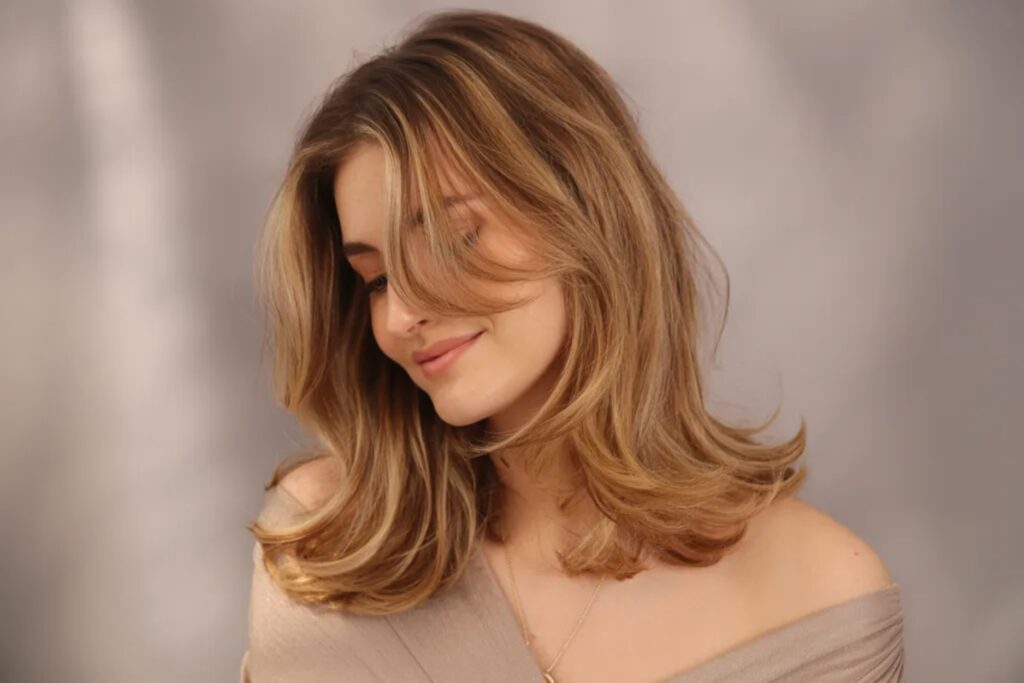
Start here if you’ve never had layers and aren’t sure you’ll like them. Most of the length stays intact. A few longer pieces get cut around the face to break up what would otherwise be a flat curtain of hair. Fine hair gets the most out of this since the shorter framing pieces near the crown fake volume that isn’t really there. It grows out slowly, too, so you’re not back in the chair every six weeks just to keep the shape from collapsing.
Shag with Feathered Layers
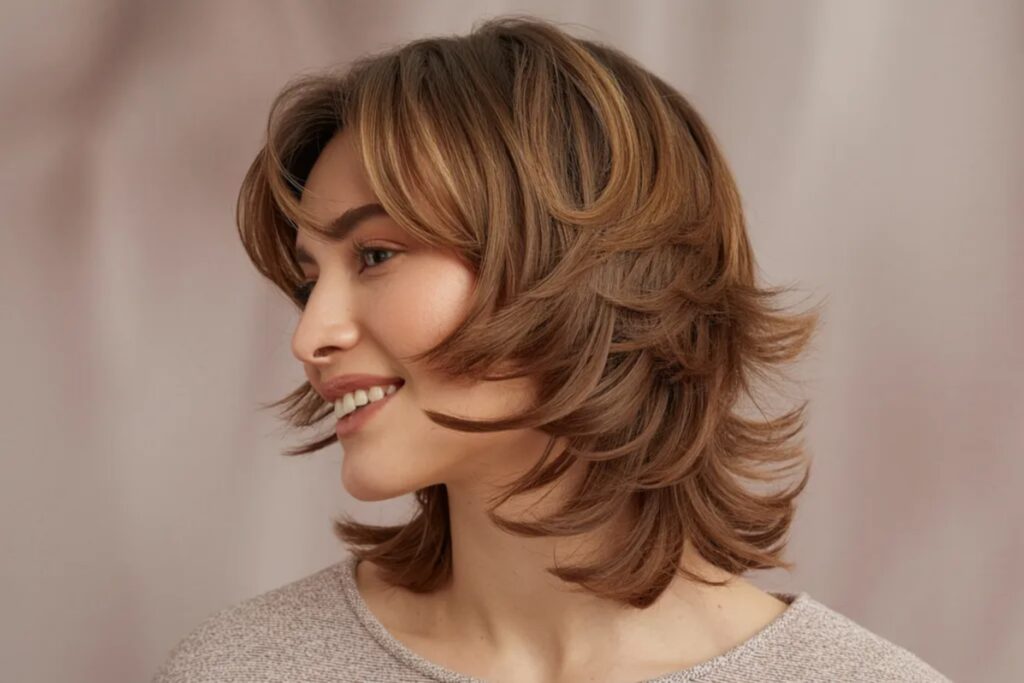
The shag came back a few years ago and hasn’t left, mostly because it fixes a specific complaint: hair thick enough to look heavy but not thick enough to look intentional. Feathering through the mid-lengths and ends cuts the bulk and leaves a slightly undone finish that genuinely looks better the less you touch it. If your hair already has some natural wave, this is probably the best cut on the list for you. Straight, fine hair can end up looking a little sparse in a shag, so it’s worth being upfront with your stylist about that before you commit.
Curtain Bangs with Layered Ends
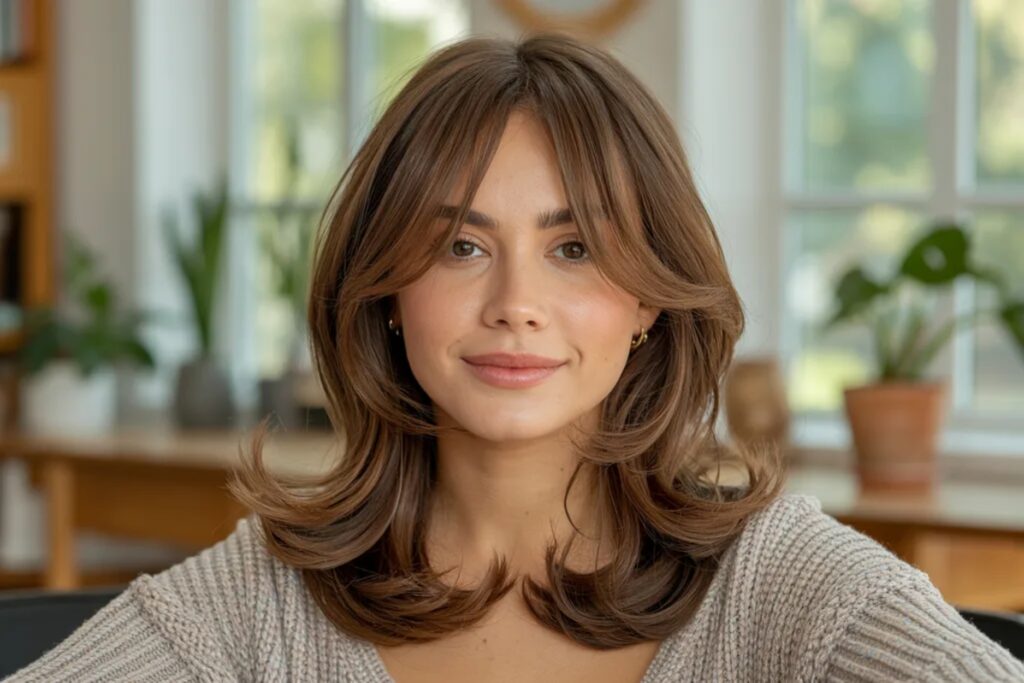
Curtain bangs get all the attention on their own, but they only work when the rest of the cut has layers to blend into. Cut without them, the fringe sits as its own separate block, which is the actual reason curtain bangs sometimes look stuck-on instead of grown-in. Blended into longer, layered sides, they soften a wider forehead or a squarer jaw without turning into a commitment. They’re also easy to grow out or pin back, which makes this one of the more forgiving bang decisions on this list.
Face-Framing Layers for a Rounder Silhouette

Sometimes hair doesn’t need more length, it needs more shape. This version keeps the cut fairly simple overall but stacks shorter layers around the face to build a rounder silhouette instead of one flat sheet. It’s a smart move for hair that goes thin and stringy at the ends, since the shorter framing pieces pull the eye up and away from that. Waves hold the shape here noticeably better than straight styling does. A loose curl with a wand does more for this cut than a flat iron ever will.
Long Layers with a Middle Part
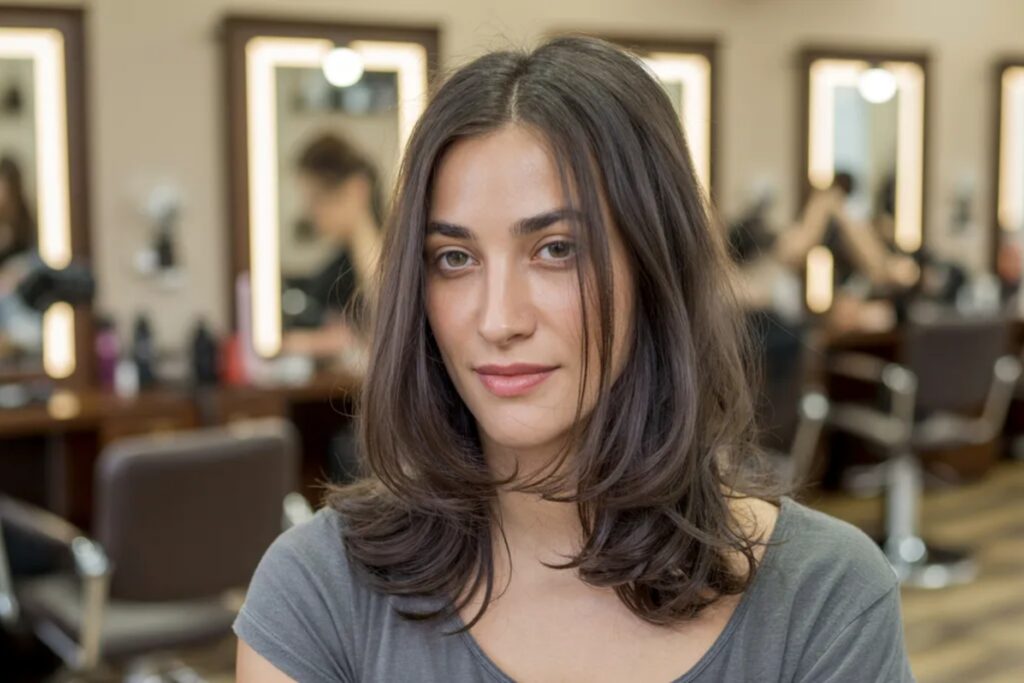
There’s a specific low-effort polish that comes from a middle part and barely-there long layers. The layering here is subtle, mostly there to stop the ends from reading as one blunt, heavy line. Oval and heart-shaped faces suit a middle part best since it splits things symmetrically rather than pulling everything to one side. It holds up in humidity better than most cuts on this list too, since it doesn’t depend on a specific curl pattern to look finished.
Layered Bob That Grazes the Shoulders
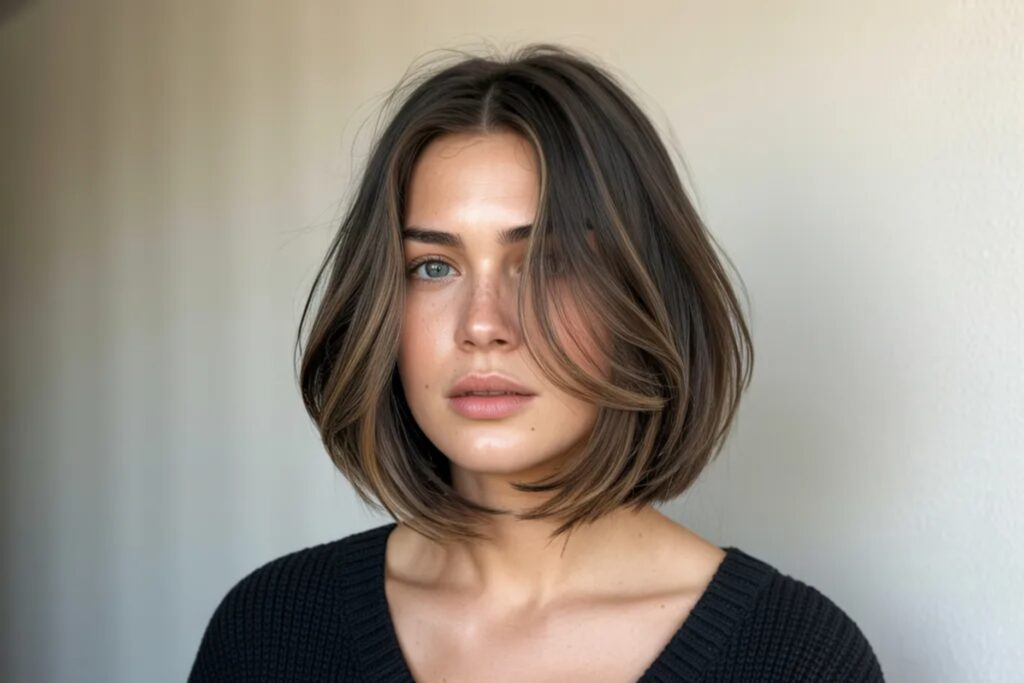
This sits somewhere between a bob and true medium length, landing right at or just past the shoulders with layers cut into the ends. It’s the cut to ask for if you’re growing out a shorter bob and dreading the in-between stage, since the layering prevents the stiff, blunt look that makes growing-out hair so obvious. Fine to medium density hair does best here. On very thick hair, this length can occasionally puff out rather than lie flat, so ask your stylist about thinning the ends slightly if that’s a concern.
Wolf Cut for Textured Volume
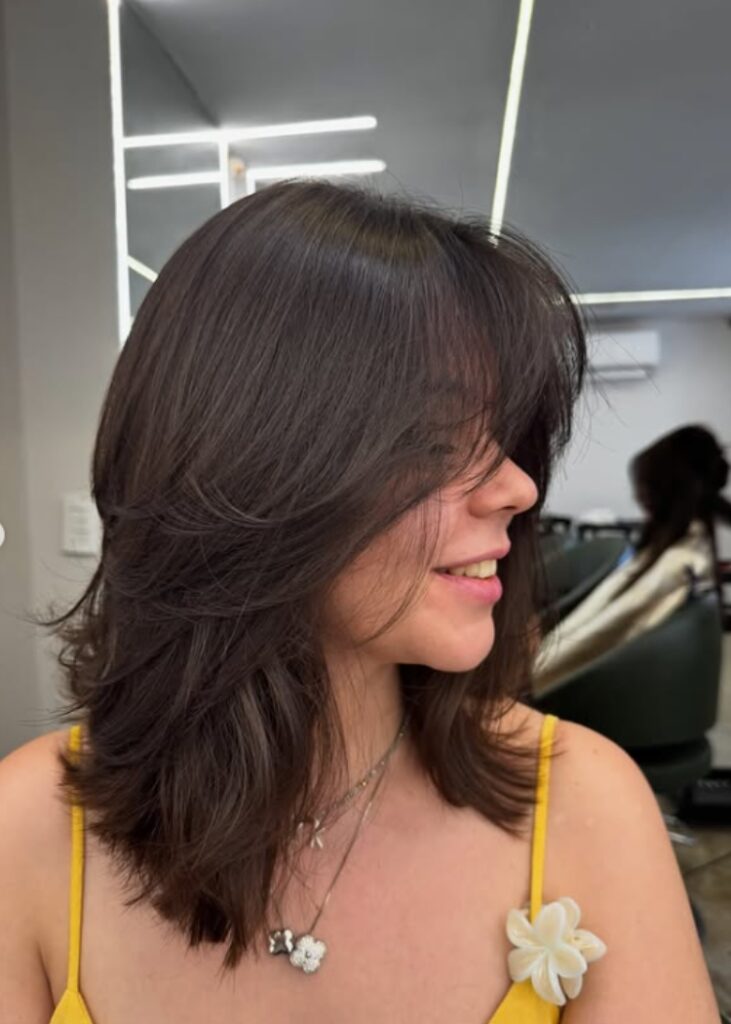
The wolf cut takes the shag’s messiness and turns it up. Shorter, more aggressive layers through the crown build real volume up top before blending into longer pieces underneath. It’s the boldest pick on this list, and it depends on some natural texture to look right. Pin-straight hair can end up looking oddly separated rather than textured. Once it’s cut correctly, though, it’s genuinely low-maintenance. Mousse at the roots and some finger-styling covers most days, which is why people who are sick of blow-drying tend to gravitate here.
Layered Cut with Side-Swept Bangs

Side-swept bangs blended into layers are the softer alternative to a full fringe. Instead of a hard line across the forehead, the bangs fold into the rest of the cut. This is one of the rare bang styles that suits almost any face shape, and it grows out into a normal side part instead of forcing an awkward stage. The layers elsewhere in the cut matter more than people realize here. Without them, the bangs can end up looking disconnected from everything else, like they were added on as an afterthought.
Long Layers for Thick, Heavy Hair
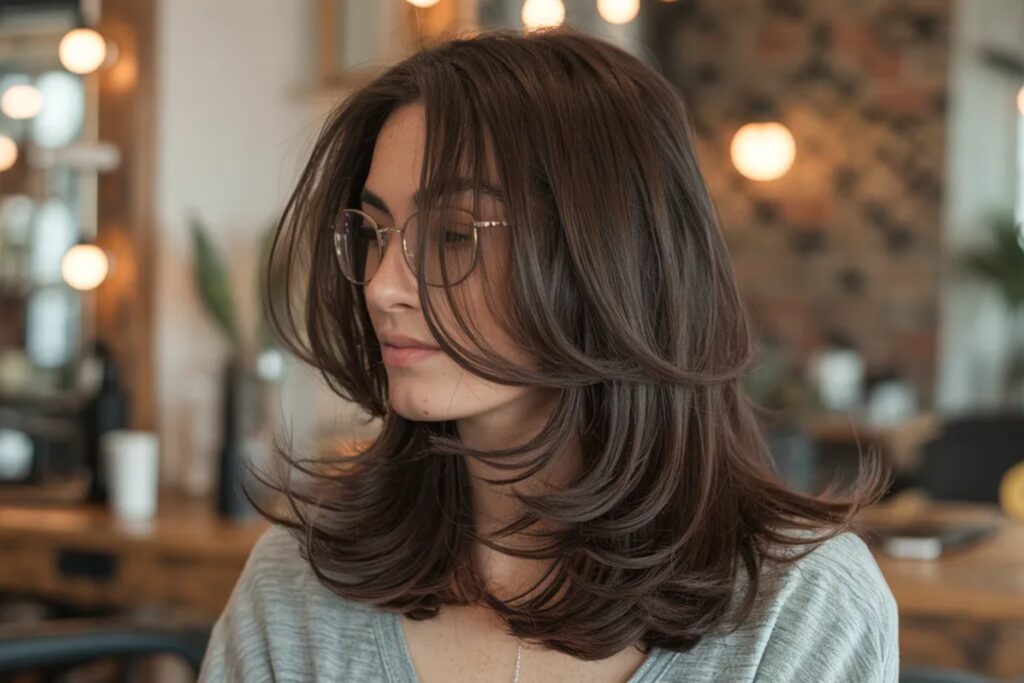
Thick hair at medium length turns into an actual weight problem, not just a styling one. Long layers cut generously throughout remove bulk without sacrificing length, so the ends move instead of sitting like a solid block. This isn’t about adding volume. It’s about subtracting weight that was never doing you any favors. As a bonus, it usually dries faster and holds a style longer, since there’s simply less hair packed into the same space once it’s thinned out.
Face-Framing Layers with Balayage Highlights
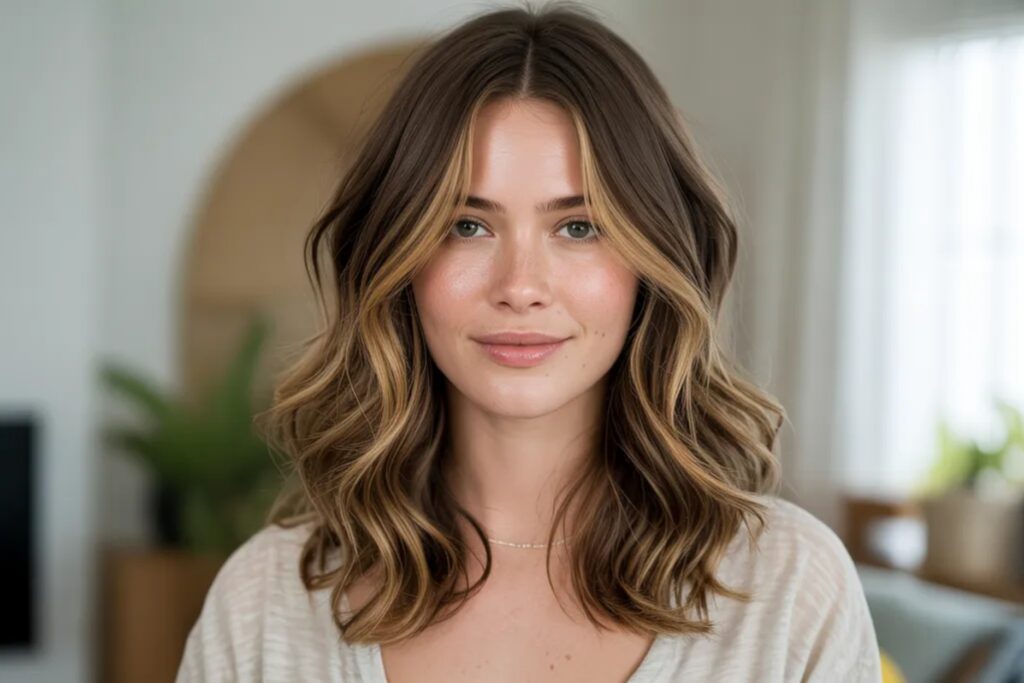
Layers and color do more together than most people give them credit for. A few well-placed balayage highlights around face-framing layers make the movement in the cut far more visible, since the lighter pieces catch light exactly where the layers create motion. You don’t need much. Even a couple of soft, sun-kissed pieces near the face are enough to make the layers read as dimensional instead of flat. It’s a small add, but it’s the one most likely to make people ask where you got your hair done.
Final Thoughts: Haircut Ideas for Medium Hair Layers Worth Trying
Most of these haircut ideas for medium hair layers are solving the same underlying complaint from a different angle: hair that’s the right length but somehow still looks unfinished. Sometimes that means adding volume, sometimes it means cutting weight out, and sometimes it’s just about giving a flat cut somewhere to move. Bring two or three of these to your stylist instead of one photo, and tell them honestly what your hair does badly on a normal Tuesday. That’s the conversation that actually gets you a cut worth keeping past the first wash.
FAQs: Haircut Ideas for Medium Hair Layers
Are layers good for medium length hair?
Yes. Layers add movement and shape to medium length hair, which can otherwise look flat or heavy at one uniform length. They’re especially useful for thick hair that needs weight removed or fine hair that needs the illusion of volume.
What layered haircut is best for thin medium hair?
Long layers with face-framing pieces or a soft shag work best for thin, medium-length hair. Shorter layers concentrated near the crown and face create the appearance of fullness without cutting away length.
How often do you need to trim layered medium hair to keep the shape?
Most layered cuts hold their shape well for eight to ten weeks. Shaggier, more textured layers can stretch a bit longer since they’re meant to look a little undone anyway.
Do layers make medium hair look thicker or thinner?
It depends on placement. Layers cut around the face and crown add the appearance of thickness, while heavy layering throughout can remove bulk and make very thick hair look thinner and lighter.
What’s the difference between a shag and a wolf cut for medium hair?
A shag uses softer, more blended feathered layers throughout, while a wolf cut adds shorter, choppier layers concentrated at the crown for a bolder, more voluminous look on top.