A small bedroom doesn’t need a full lounge set to feel comfortable. It needs one piece, sized right, put where the light is decent. The best sitting area ideas for small bedrooms work with space that already exists: an empty corner, the stretch under a window, the foot of the bed, or a piece of furniture that already earns its keep and can quietly take on a second job. Before you buy anything, measure what’s actually free once you account for the door swing, the closet, and the path to the bed, not just the empty-looking patch of floor.
Turn a deep window ledge into a seat
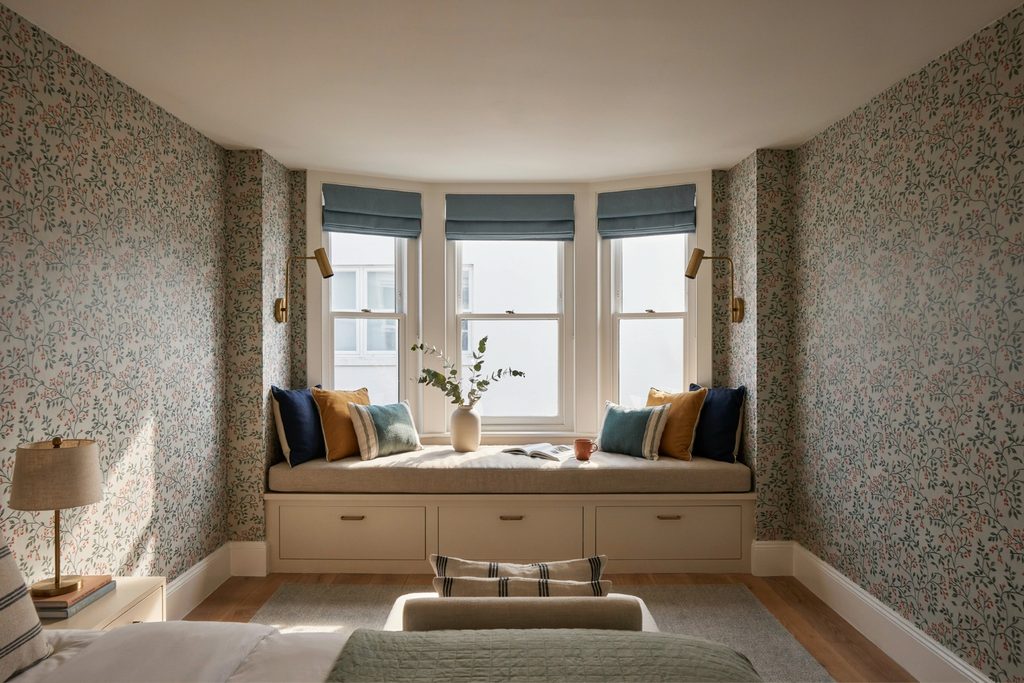
A window can be the coziest spot in the room, if the ledge or built-in bench is at least 10 to 12 inches deep and rated to hold real weight. A narrow decorative sill isn’t a seat no matter how good the cushion looks; I’ve seen people find that out the hard way with a cracked bracket. If you do have a window bench, add a fitted cushion, two supportive pillows, and a lightweight throw. A small wall-mounted sconce beside it means the spot still works after the sun goes down, and sheer curtains hung close to the frame add privacy. Since the ledge is already built into the wall and all you’re adding is a cushion and a throw.
Add one slim armchair

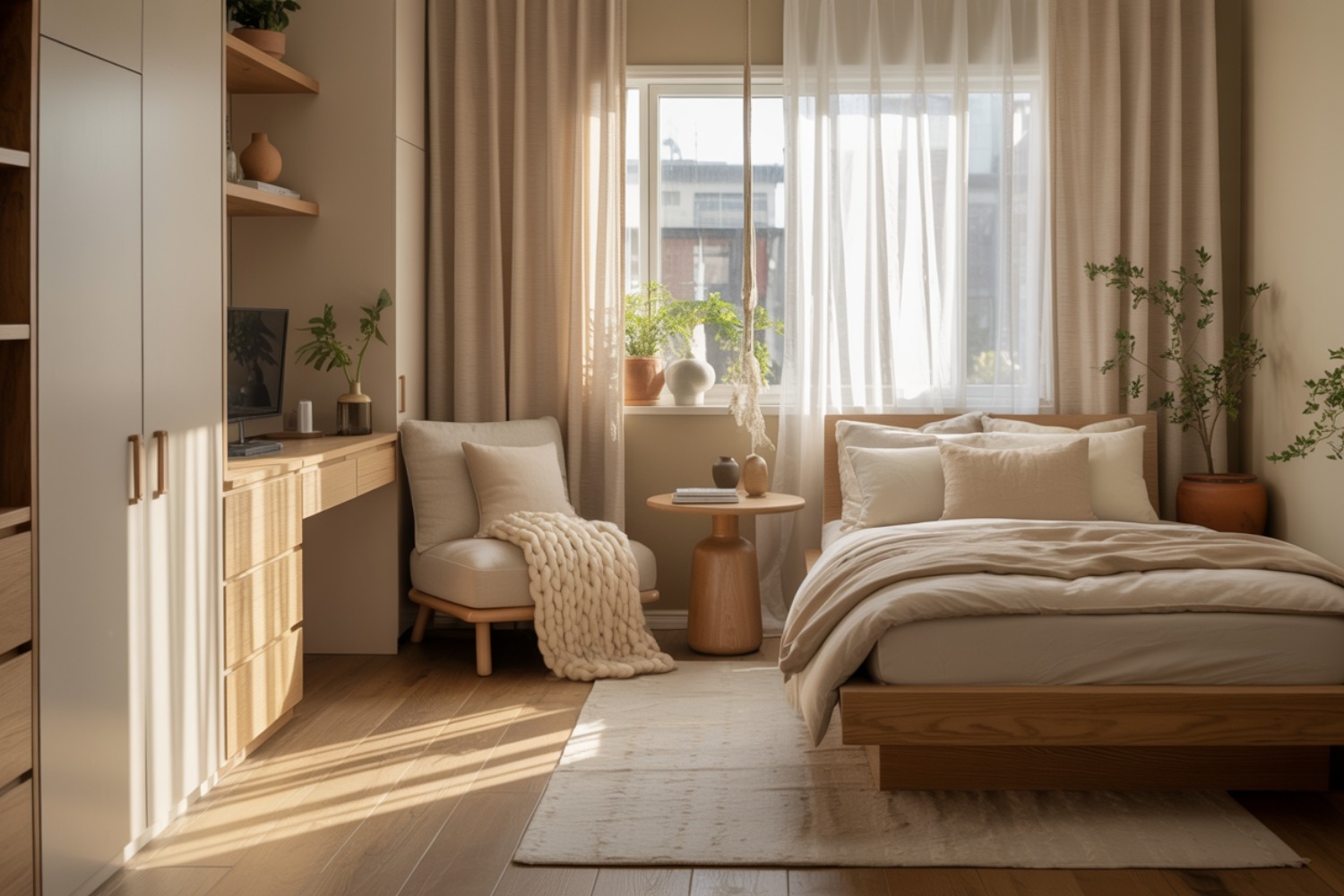
One well-chosen chair often does more than two mediocre ones. Look for a compact armchair under about 22 inches wide with exposed legs; leaving floor visible underneath makes the whole corner read as lighter and more open. Skip anything with a floor-length skirt. Measure the actual walking space around it before you commit, not just the chair’s footprint, and add a small side table only if there’s genuinely room for one.
Set a bench at the foot of the bed
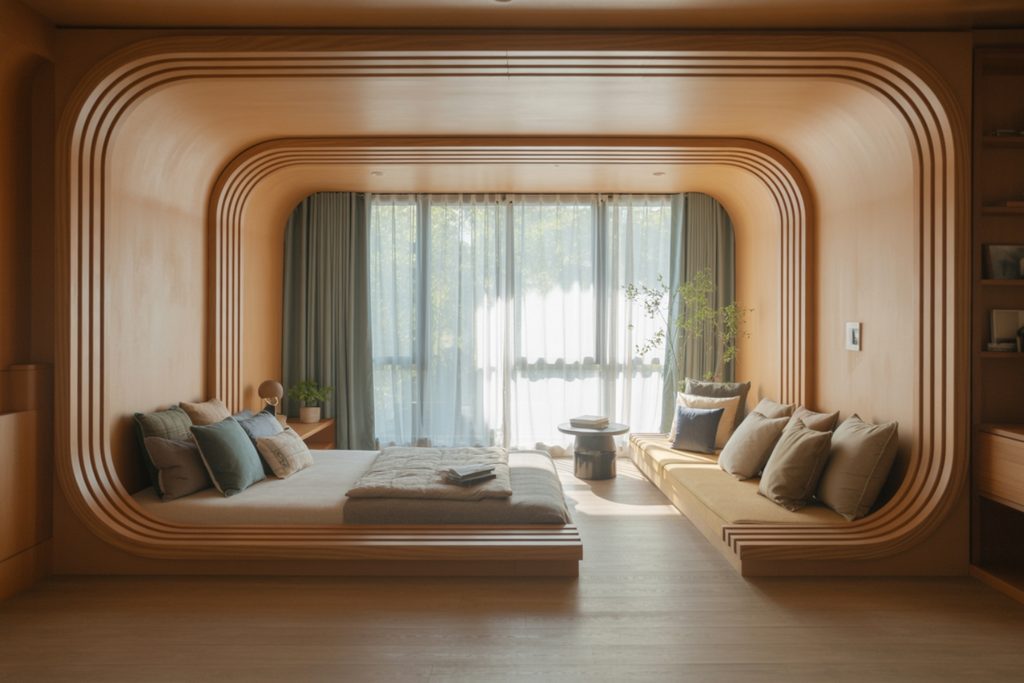
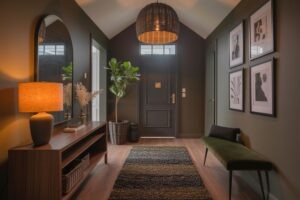
A bench reads as furniture rather than as an extra seat, which makes it an easy one to place without the room feeling crowded. Keep the depth under about 15 inches so there’s still a clear path around it, and set the height an inch or two below the mattress top so it doesn’t block the view of the bed. Wood, woven, or rattan styles feel lighter than a fully upholstered one. If storage is tight, a lift-top bench does more work than a bench plus a separate ottoman somewhere else.
Use supportive floor cushions

Floor seating gets dismissed as a compromise, but a pair of cushions with a firm foam core, not just loose fiberfill, holds its shape for years rather than flattening in a season. Two cushions next to a small rug create a casual sitting spot with almost no visual weight, and you can stack them in a closet the moment you need the floor back. A low round tray nearby covers for a side table. It’s the only entry among these sitting area ideas for small bedrooms that folds away into a bag by morning if you need the space back. It won’t suit everyone; if getting up from floor level is uncomfortable, skip it and move down the list.
Pick a folding or stackable stool
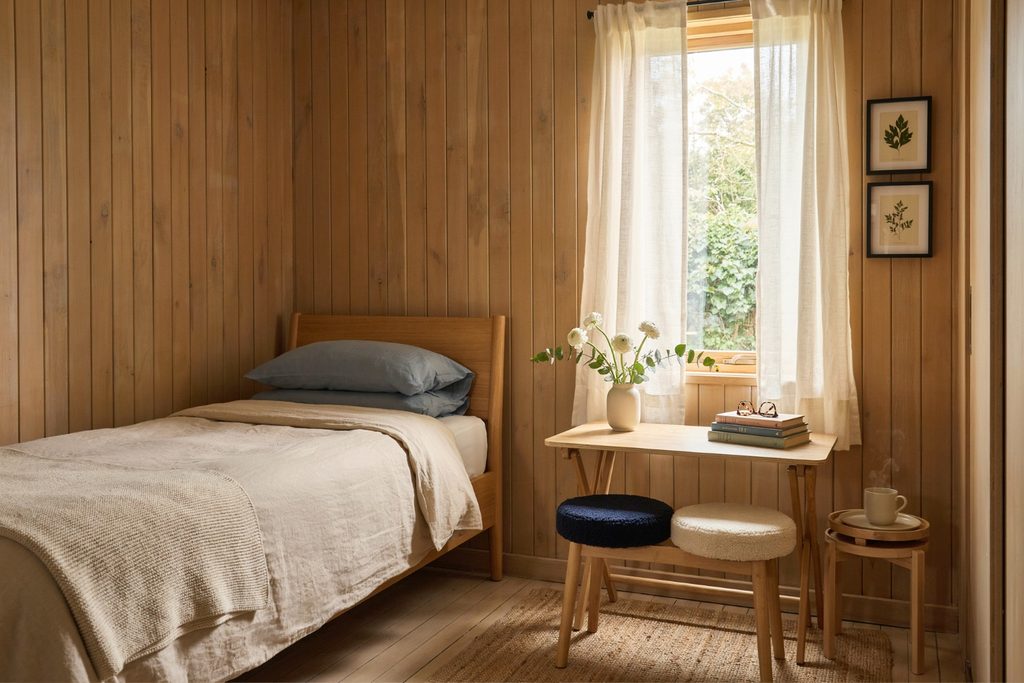
A folding stool solves what fixed furniture can’t: some days you want somewhere to sit, other days you want the floor. Choose a wooden folding stool with a canvas or leather seat, the kind sold for farmers markets, over anything plastic, which tends to look temporary no matter how you style it. Most hold well over 200 pounds and fold flat enough to lean two of them against a wall. Move it to the vanity, the window, or the closet as the week changes.
Build a daybed into a recessed alcove
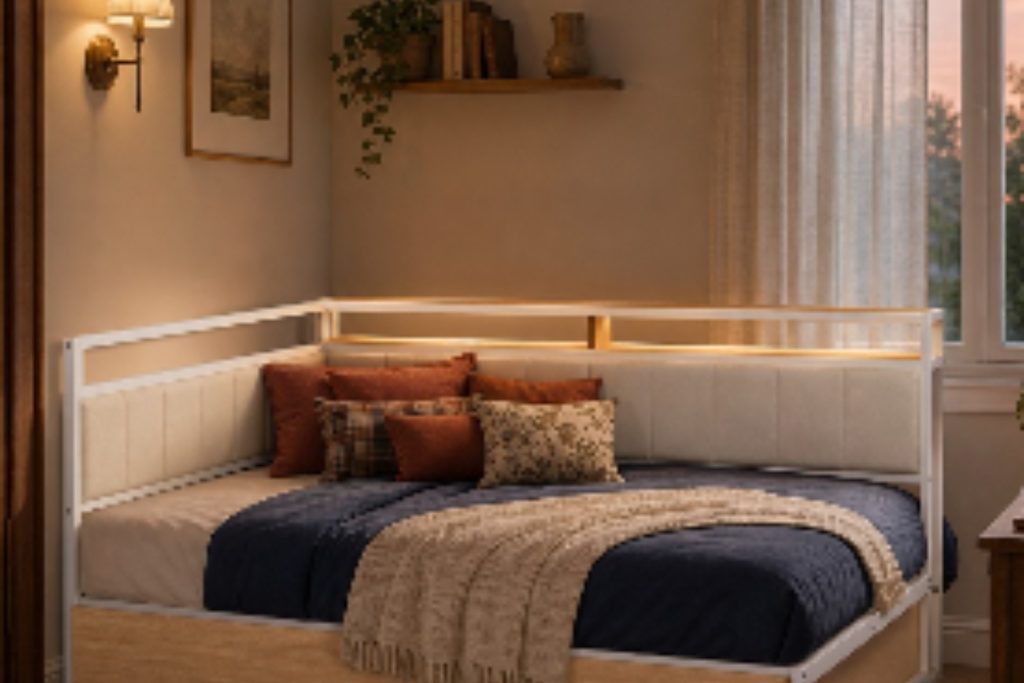
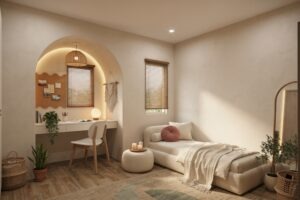
A twin mattress needs about 39 inches of width, so if your room has a recessed wall deep enough, even a shallow leftover from a closed-off closet, a daybed makes far better use of it than a second freestanding bed. Set the mattress on a low platform, stack bolster pillows along the wall like a sofa back, and it works as guest sleeping by night and real seating by day. Plan on some trim work or at least a coat of paint so the alcove looks built-in rather than forgotten. It earns its keep fastest in a room that also functions as a home office or a kid’s space that flexes between play and rest.
Use Vanity Chair

Most people never move the vanity chair more than three feet from the mirror, which is a waste of a chair that’s already in the room. Choose one with a slight backrest and a cushioned seat rather than a bare stool, and it becomes a real second seat instead of a five-minute prop for getting dressed. Drag it to the window on a weekend morning and it works fine for coffee and a book. It’s the cheapest idea on this list because the furniture is already paid for.
Add a compact swivel chair near the window
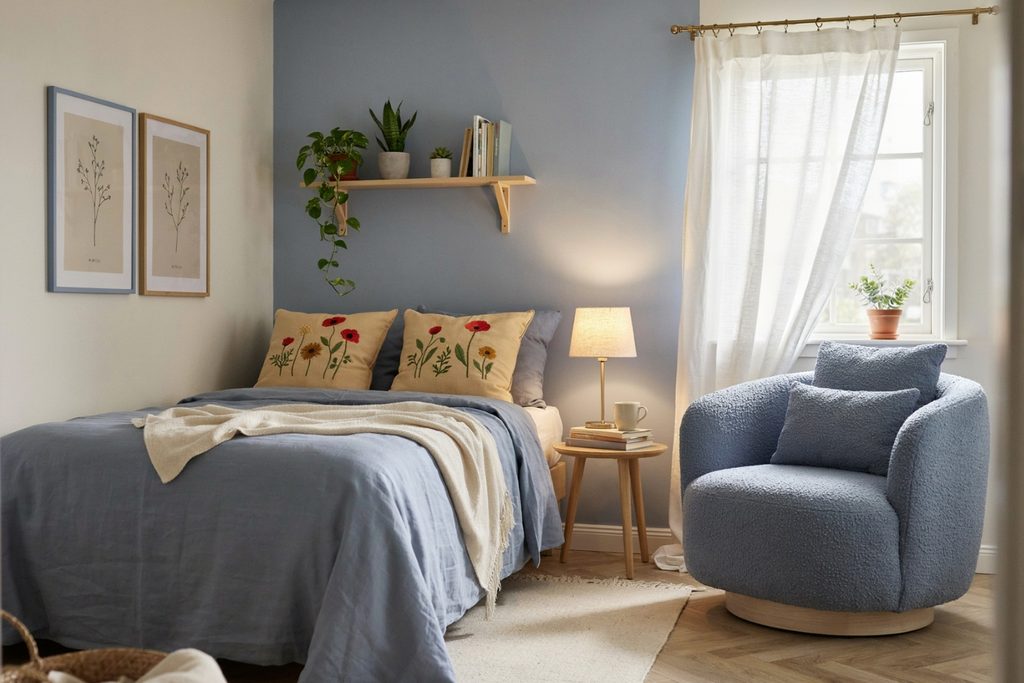
A swivel base lets you face the window or the room without needing floor space to turn a whole chair around, which matters more in a small bedroom than almost anywhere else in the house. Leave about 12 to 18 inches of clearance around it so it can actually rotate. A round-backed style, sometimes sold as a barrel or papasan chair, softens a room that’s otherwise all straight lines. Keep the upholstery a shade lighter than the walls so it doesn’t fight everything else for attention. A swivel base is the pick among sitting area ideas for small bedrooms that need to switch jobs fast: dressing table one minute, reading chair by the window the next.
Fit a slim loveseat along an open wall
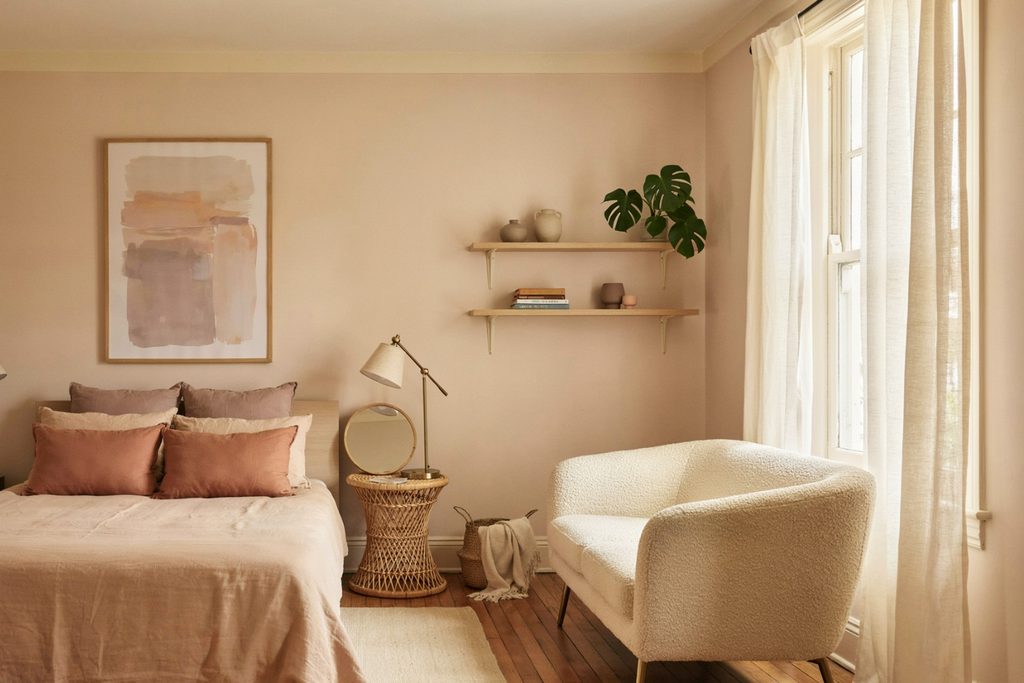
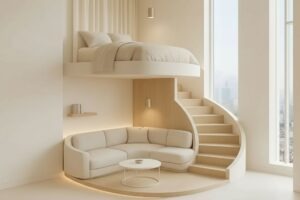
This is the priciest and most committed of the sitting area ideas for small bedrooms on this list, and it only works in a room at least 10 feet wide with a stretch of open wall doing nothing else. Measure the bed, the closet swing, and the walking path before you buy anything. A loveseat under 52 inches wide with slim track arms keeps the scale right for a bedroom instead of a living room, and works best set against the wall opposite the bed rather than facing it head-on. Skip the coffee table; a stack of books does the same job.
Pouf and hanging chair
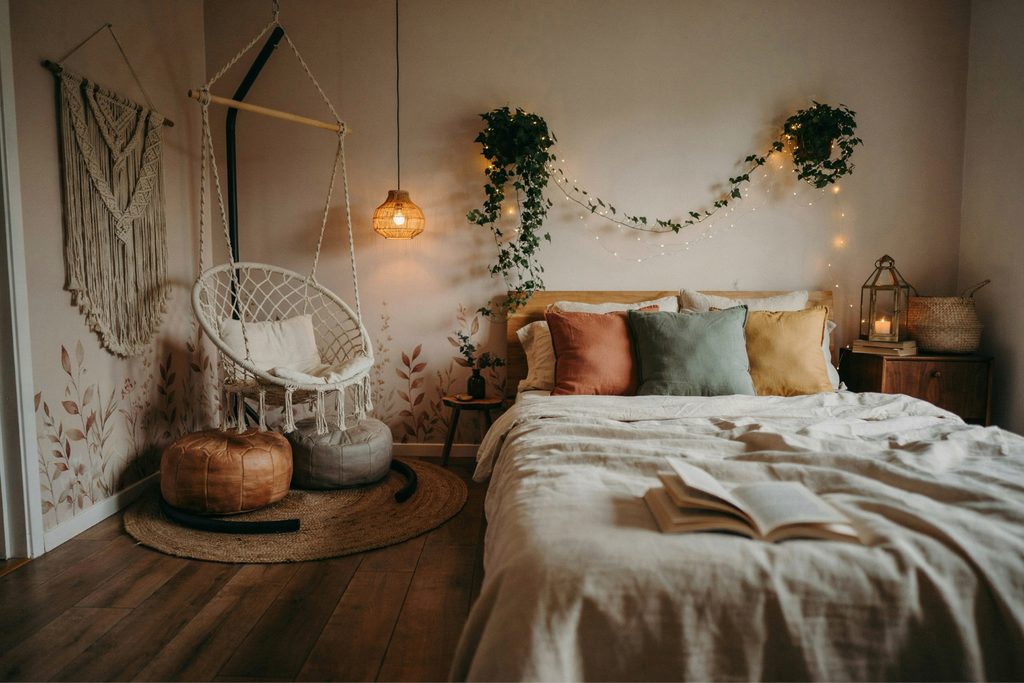
A simple pouf near a closet or dresser earns its space as extra seating and a footrest at the same time, without dominating the room visually. A hanging chair is a step up in commitment. It still needs clear floor space to swing safely, and it has to be anchored to a ceiling joist rated to carry both the chair and someone moving in it, not just a hook in drywall. If you’re not sure the ceiling can take it, get a contractor to check before you drill.
Sitting area ideas for small bedrooms
Good small-bedroom seating isn’t about adding more furniture, it’s about choosing the one piece that fits the room you actually have. Keep the walkway clear, favor slim arms and exposed legs over anything bulky, and put the seat where the light actually falls rather than wherever there happened to be an empty corner. Measure twice, buy once, and treat this list as something to test against your own floor plan, not a checklist to complete.
Frequently Asked Question
1. How do I create a sitting area in a small bedroom?
Use an empty corner, window area, or the foot of the bed with one compact seat.
What seating is best for a small bedroom?
Slim chairs, benches, stools, poufs, and storage seating work best.
Where should I place a chair in a small bedroom?
Near a window, in an unused corner, or beside the bed without blocking walkways.
How do I make a small sitting area feel cozy?
Add a cushion, throw, soft lighting, and keep the setup uncluttered.
Can a tiny bedroom have a sitting area?
Yes. Use flexible, compact, or multifunctional seating that fits the available space.